The Philosophy of Repair: Why the Future of Ukrainian Communities Relies on Daily Resilience
An exploration of how Ukrainian society adapts to ongoing challenges, where repairing damaged infrastructure becomes the foundation of daily survival and community endurance.
 🎓Education
Photo: Ukrainska Pravda
Key points
- Broken world thinking focuses on repair and maintenance rather than new construction.
- Utility workers' invisible labor remains the backbone of urban resilience.
- Infrastructure and ecological recovery require balancing historical plans with new environmental realities.
Contemporary Ukrainian reality forces society to rethink traditional concepts of progress and development. While previous decades focused on new construction and grand blueprints, today the emphasis shifts toward endurance, maintenance, and fixing what is already broken. This approach, known as the 'broken world thinking,' prioritizes erosion, damage, and the daily invisible labor of keeping essential infrastructure functioning over utopian projects.
Invisible Labor and the Lessons of Daily Maintenance
For residents across Ukrainian cities, municipal workers repairing substations in the dark have become a familiar symbol of resilience. Yet, this labor often remains invisible until services are abruptly cut off again. Researchers note that breakdowns and disruptions serve as a mechanism for societies to learn adaptation, as every repair requires improvisation in the face of ongoing decay and external shocks.
These challenges extend far beyond the energy sector into broader ecological and social domains. For instance, the debate surrounding the former Kakhovka Reservoir illustrates a complex dilemma between returning to mid-century engineering plans and accepting a newly emerged natural landscape. Resolving such issues demands a delicate balance between human resource needs and environmental preservation.
What This Means for Pervomaisk
For our local community, the philosophy of repair is not an abstract theory but a practical daily reality of survival and self-organization. Pervomaisk residents understand firsthand the effort required to maintain critical utilities under severe constraints. Recognizing the importance of routine maintenance over purely reactive emergency responses will help local authorities and citizens better prepare for future challenges together.
Source Ukrainska Pravda — pravda.com.ua/columns/2026/11/22/8063089/ ↗
Read next
 🛡️Security
General Ben Hodges: NATO is unprepared for potential air war with Russia
Former US commander Ben Hodges warns about NATO's air defense shortages and vulnerability of key infrastructure.
 🇺🇦Ukraine
Mark Rutte: No consensus on Ukraine's NATO membership yet
NATO Secretary General Mark Rutte stated that there is currently no unanimity among Alliance members regarding Ukraine's accession.
 🛡️Security
Humanitarian crisis in occupied Hola Prystan: burials in cardboard boxes and $300 trips for pensions
Residents of the temporarily occupied Hola Prystan community in Kherson region face a severe humanitarian crisis amid a total lack of healthcare and services.
 🛡️Security
Artificial Intelligence on the Frontline: How Ukrainian Ground Robots Are Moving Toward Autonomy
The Ukrainian defense industry is actively integrating artificial intelligence into ground robotic systems to reduce operator dependency and enhance combat efficiency.
 💼Economy
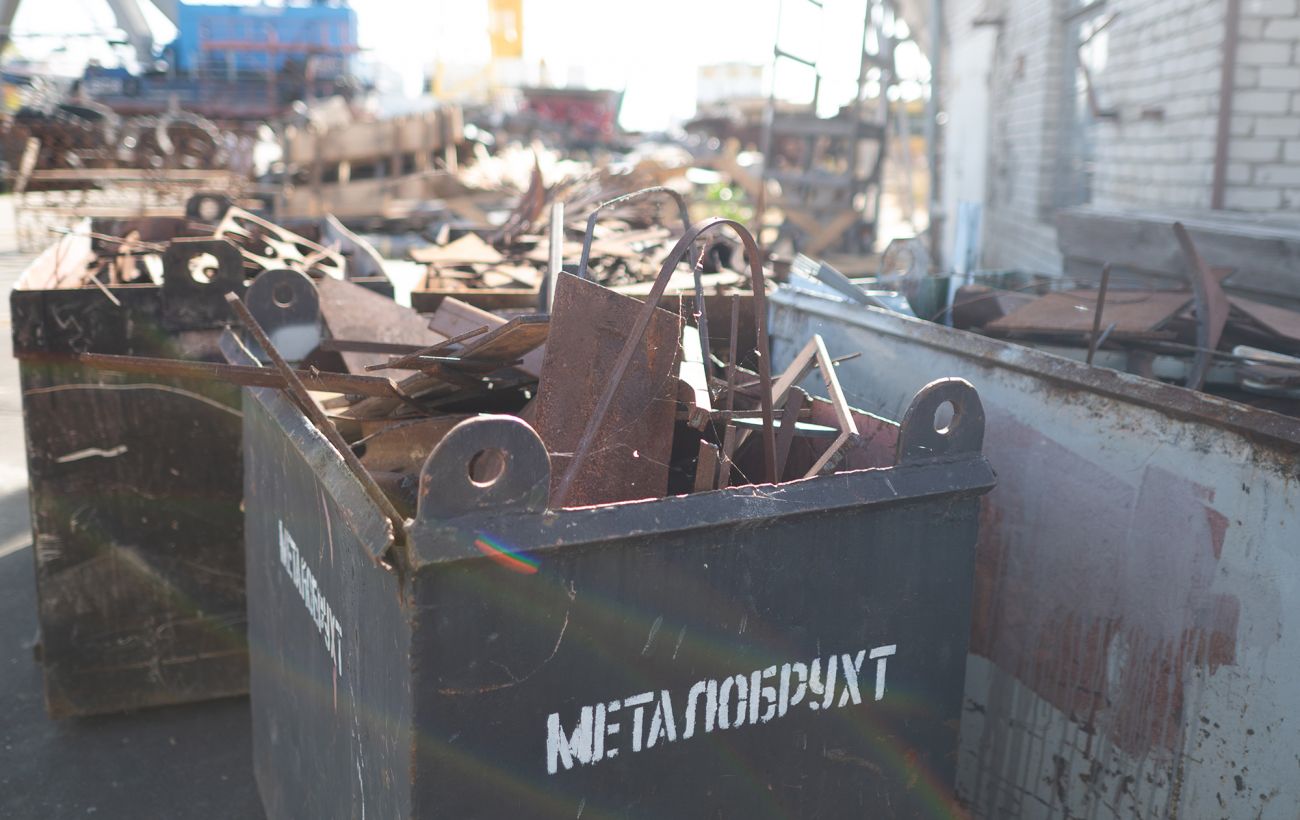
Scrap metal exports at low prices: experts warn of risks to the budget and industry
MP Musa Magomedov has criticized the Ministry of Economy's proposal for scrap metal export pricing, highlighting threats to the domestic steel industry and potential budg…
 🧠AI Analysis
New Reality of Maritime Logistics: Why Incidents in Libya and the Baltic Threaten Russia's Global Presence
A series of recent emergencies involving Russian vessels in Libya and the Gulf of Finland demonstrates the vulnerability of Moscow's military sea routes far beyond active…