Myths about lying: how eyes actually react when hiding information
A new scientific study debunks the stereotype that liars always avoid eye contact. It turns out that when deceiving, people actually stare more intensely and blink less frequently.
 ⚽Sport
Photo: TSN
Key points
- Liars blink less and hold their gaze longer
- Pupil dilation is linked to attention, not just deception
- Accuracy of detecting lies by facial expression is only 54%
- Fact-checking is more reliable than behavioral cues
A new perspective on deceptive behavior
The common belief that a person telling a lie tries to avoid eye contact has proven to be incorrect. Researchers from the University of Ulm in Germany conducted an experiment with 36 volunteers to determine exactly how eyes react to attempts to withhold information. The results, published in the journal PLOS ONE, demonstrate that the behavior of liars is significantly more complex than previously thought.
Experimental findings
During the tests, participants were asked to conceal certain facts while using specialized equipment to track eye movements. It turned out that during moments of deception, people blinked less frequently, and their gaze became more fixed and prolonged. This was especially noticeable when the subjects looked directly at the interviewer rather than at the objects being discussed.
- Pupils dilated when recognizing hidden information.
- Reaction time for a false answer was longer — about two seconds compared to one second for the truth.
- No single indicator is a 100% proof of lying.
Scientists emphasize that laboratory conditions differ from everyday communication. Since the accuracy of detecting lies based on behavior averages only 54%, experts advise focusing on fact-checking and the logic of the narrative rather than on facial expressions or eye movements.
Source TSN — tsn.ua/tsikavinki/ochi-zavzdy-vydaiut-pravdu-u-brekhuniv-vyiavyly-tsika… ↗
Read next
 🛡️Security
Volodymyr Zelenskyy on Ukraine's Stance Regarding Territorial Compromises
The President of Ukraine emphasized that territorial integrity is not a subject for concessions, highlighting the importance of sovereignty for the nation's future.
 🛡️Security
Zelenskyy announces expectations for prisoner exchange lists following UAE talks
President Volodymyr Zelenskyy announced that Ukraine expects to receive lists of prisoners of war from Russia for a large-scale exchange within the coming weeks.
 💼Economy
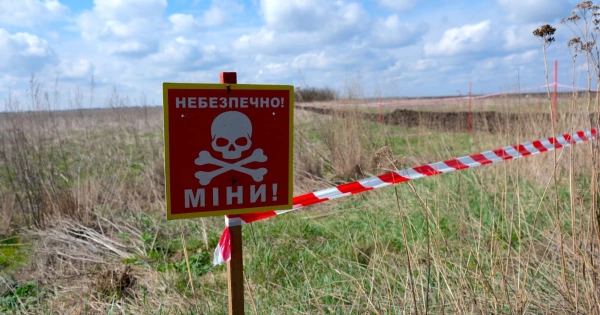
Resilience Amid Occupation: Kherson Farmers Recover from 300 Million UAH in Losses
Three agricultural enterprises in the Kherson region continue operations despite suffering massive equipment losses and land mining during the occupation.
 🏛️Politics
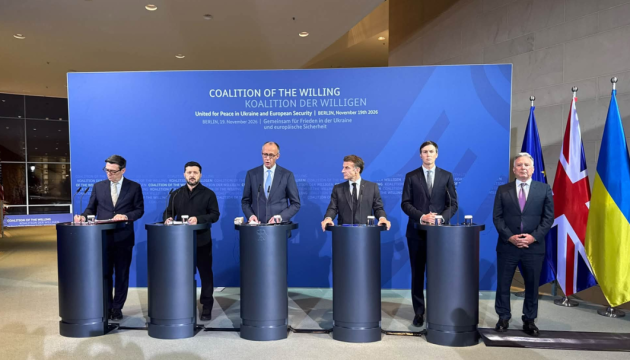
Volodymyr Zelenskyy on Security Guarantees: Real Military Presence Over Declarations
The President of Ukraine emphasized that security guarantees modeled on NATO's Article 5 must include the physical presence of foreign military bases on Ukrainian soil.
 🏙️City
Volodymyr Zelenskyy: Russia is losing on the battlefield and escalating terror against civilians
The President of Ukraine stated that the aggressor is failing on the front lines and is attempting to compensate with strikes on civilian populations.
 🩺Health
Irregular Sleep Increases Heart Disease Risk: Scientific Findings
New research shows that an inconsistent sleep schedule is just as dangerous for the heart as sleep deprivation.